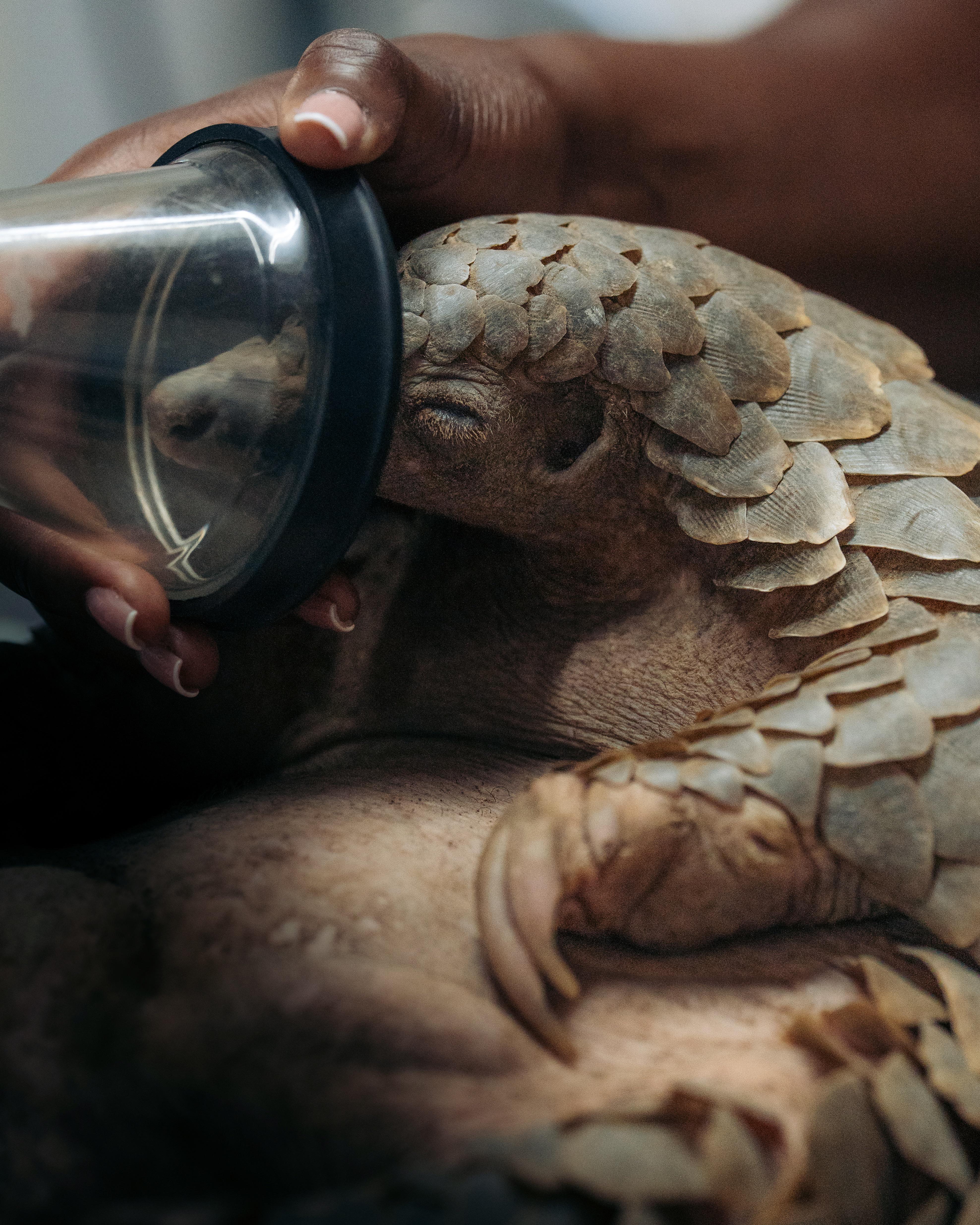
The pangolin, often referred to as the world’s most trafficked animal, faces immense threats due to illegal hunting, poaching, and the demand for its scales and meat in traditional medicine and as a luxury delicacy. Despite these challenges, stories of rescue and recovery offer a glimmer of hope. One such story is that of Sparky, a ground pangolin whose journey from near-death to thriving in the wild showcases the dedication of conservationists and the resilience of these unique creatures.
Sparky’s Struggle and Recovery
Sparky was found stuck in an electric fence, suffering from severe neurological damage, malnutrition, dehydration, and a septic wound on his tail. His inability to walk straight or use his tongue for feeding painted a grim picture. However, the team at the Pangolin Conservation and Research Foundation (PCRF) worked tirelessly to rehabilitate him. Through daily clinic visits, anesthesia, blood panels, IV drips, and tube feeding with a specialized ant and termite smoothie, Sparky began to recover. As his health improved, he was introduced to foraging walks to regain essential survival skills, preparing him for rewilding. Today, Sparky is back in the wild, reportedly thriving and possibly even finding a mate.
The Pangolin’s Plight
Pangolins are trafficked primarily for their scales, which are used in traditional medicine, and their meat, considered a delicacy in some cultures. Despite no scientific evidence supporting the medicinal benefits of pangolin scales, the demand persists, driving poaching and endangering their populations. Additionally, their defense mechanism—curling into a ball—makes them easy targets for poachers. Their relative obscurity compared to other endangered species also limits public awareness and funding for conservation efforts.
Conservation Efforts and Challenges
Organizations like PCRF play a crucial role in rescuing and rehabilitating pangolins, but their work is often hindered by limited resources and public ignorance. Efforts to educate communities and combat trafficking are ongoing, but the battle remains uphill. Social media and storytelling, like Sparky’s tale, are vital tools in raising awareness and garnering support for these efforts.
A Glimmer of Hope
Sparky’s story is a testament to the impact of dedicated conservation work. While the challenges facing pangolins are immense, stories like his remind us that every rescued and rehabilitated animal is a step toward their survival. By supporting organizations like PCRF and spreading awareness, we can contribute to the fight against pangolin trafficking and ensure these incredible creatures continue to roam the wild.
As one commenter aptly noted, 'It all boils down to people being assholes,' but it’s also people—conservationists, photographers, and advocates—who are making a difference. Sparky’s journey from victim to survivor is a powerful reminder of what can be achieved with compassion and determination.