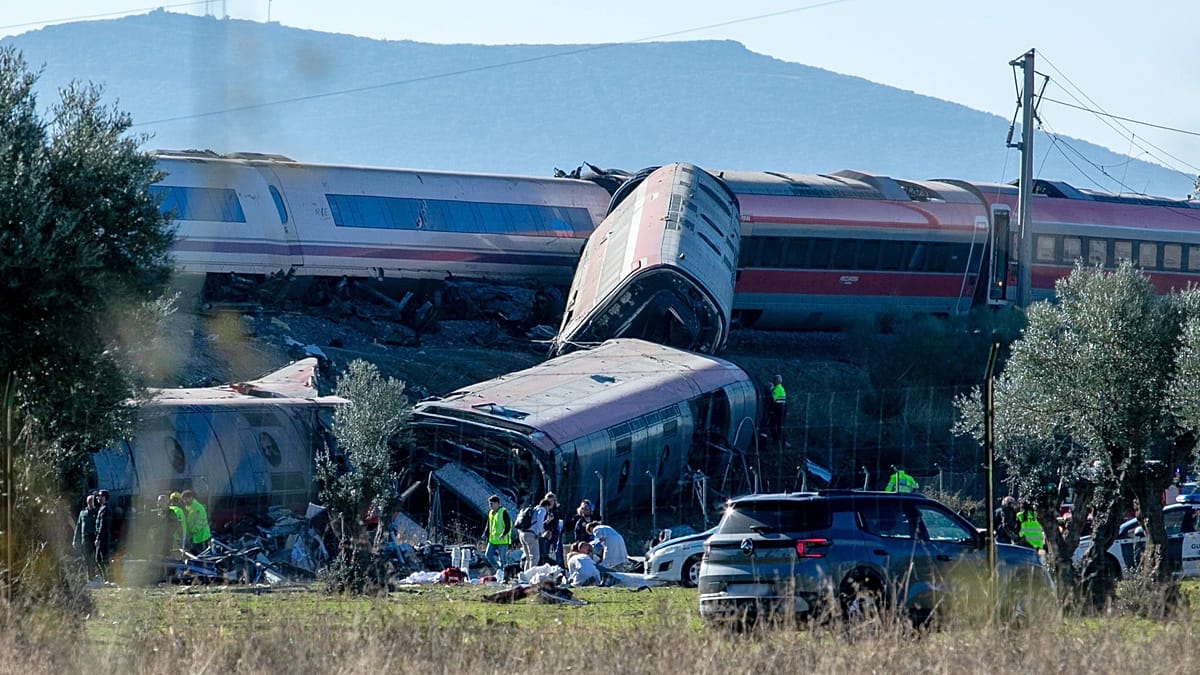
A catastrophic collision between two high-speed trains in central Spain has left at least 68 people dead and more than 100 others injured, marking one of the nation's deadliest rail disasters in recent history. The crash occurred on a straight section of track near Urda in the province of Toledo, south of Madrid, sending shockwaves through a country already grappling with mounting questions regarding its rail safety infrastructure.
The Incident and Immediate Aftermath
The disaster unfolded at 8:54 am local time on the Madrid-Seville line, involving trains operated by rail companies Renfe and Iryo. According to officials, the impact caused the two rear carriages of the Iryo train to derail, scattering heavy wreckage across the tracks and a nearby embankment.
Emergency services deployed a massive response to the scene, including traffic police, aerial surveillance units, drone operators, and specialized forensic investigators. Spain's Civil Guard mobilized multiple units to assist with rescue and recovery efforts, while passengers evacuated the area carrying their luggage through the debris.
The accident prompted the immediate suspension of high-speed rail services in both directions between Madrid and Andalusia, severely disrupting travel across the region as infrastructure operators and civil protection teams worked to secure the site.
Official Responses and Growing Scrutiny
Preliminary reports from officials indicate that the collision was triggered by human error following a computer system failure. The disaster has ignited fierce public scrutiny and profound grief nationwide.
In the wake of the tragedy, Spanish Prime Minister Pedro Sánchez expressed deep shock on social media, noting that he was maintaining constant contact with the transport minister and the president of the Castilla-La Mancha autonomous community. Health Minister Mónica García characterized the event as a major tragedy, while international leaders extended their condolences. European Commission President Ursula von der Leyen stated that Europe mourns with the victims, and French President Emmanuel Macron conveyed solidarity from France.
Public frustration has mounted sharply, particularly given that the country experienced another fatal high-speed train collision just nine months prior near the southern town of Adamuz, which claimed 46 lives.
Infrastructure Questions and Public Anxiety
Repeated safety failures have severely dented public confidence in what was once viewed as a crown jewel of national transportation infrastructure. Commentators and members of the public have voiced disbelief over how high-speed transit networks could suffer multiple catastrophic incidents in such a short window.
Concerns over oversight and operational communication have intensified, with many questioning the systemic integrity of the institutions managing the rail lines. As investigators pore over the technical logs and human actions that preceded the collision, the nation faces a painful reckoning over how to restore safety and trust to its high-speed rail network.

